
DUI & Impaired Driving Lawyer in London, Ontario
If you’ve just been charged with impaired driving — or what most people call a “DUI” — it’s normal to feel overwhelmed. A criminal charge of this kind can affect your licence, your job, and your record. Before you do anything, speak to a lawyer.
Dominion Criminal Defence represents people charged with Impaired Driving, 80 Over, Refusal, and related offences across London, Kitchener, Brantford, Guelph, Woodstock, and Cambridge. Our lawyers are available 24/7. Call (226) 984-7637 any time.
Charged With a DUI in Canada? Here's the Actual Criminal Charge
Most Canadians use “DUI” because of American TV. The Criminal Code of Canada uses different language. Knowing what you’re actually charged with matters — and it starts with your paperwork. Check the section numbers on your Undertaking
- 320.14(1)(a) — Impaired Operation (by alcohol, drug, or both)
- 320.14(1)(b) — 80 Over (operating with 80 mg or more of alcohol per 100 mL of blood)
- 320.14(1)(c) — Drug per se (drug equivalent of 80 Over)
- 320.14(1)(d) — Combined alcohol and drug per se
- 320.15 — Refusal to comply with a breath demand
Most people are charged with Impaired Operation, 80 Over, or both. If you've been charged with Refusal, the situation is different — read on.
Impaired Operation vs. 80 Over — What's the Difference?
These are two different offences that target the same behaviour from different angles.
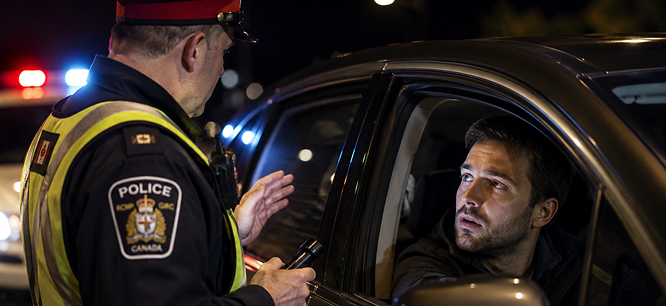
Impaired Operation is about what the officer observes — red eyes, slurred speech, difficulty walking, the smell smell of an alcoholic beverage. If the officer has grounds to believe your ability to operate a vehicle was impaired by alcohol or drugs to any degree, the charge can be laid.
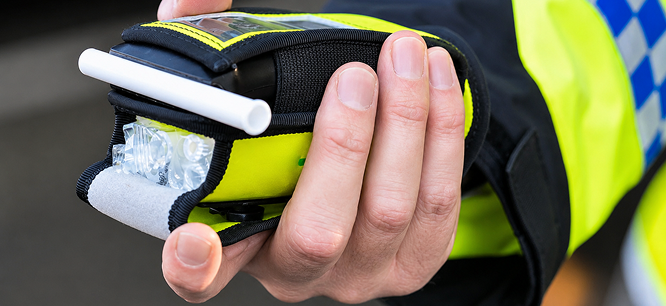
80 Over is purely about numbers. It doesn't matter how sober you appeared. If breath samples taken at the station measured 80 mg of alcohol or more per 100 mL of blood, you can be charged regardless of how you presented.
The key point: You cannot be convicted of both Impaired Operation and 80 Over for the same incident. This comes from a legal principle established in R. v. Kienapple — two charges cannot result in two convictions for the same underlying conduct. If a Crown prosecutor offers to drop one charge in exchange for a guilty plea on the other, that is not a deal. You need to beat both, or neither.
You Can Be Charged Without Driving
You don’t have to be driving to be charged. Under Section 320.11 of the Criminal Code, “operation” includes having care and control of a vehicle — and under Section 320.35, the law presumes you were operating a vehicle if you were sitting in the driver’s seat.
Sitting in the driver’s seat — whether the car is running or not — can be enough to be charged.
It is possible to rebut this presumption, but it requires convincing a judge that there was no realistic risk of you putting the vehicle in motion. This is a high bar, and there are usually stronger defences available. Talk to a lawyer before deciding on your approach.
Understanding the 90-Day Suspension and Vehicle Impoundment
When you were charged, you likely also received a 90-day licence suspension and a 7-day vehicle impoundment. These come from Ontario’s Highway Traffic Act, not the Criminal Code — meaning they’re provincial consequences that happen automatically regardless of the outcome of your criminal charges.
You cannot appeal the 90-day suspension. However, once it’s served, you can reinstate your licence — budget approximately $750 in Ministry of Transportation fees.
For the vehicle impoundment: have a licensed driver retrieve the vehicle the day the 7-day hold ends. Daily storage fees accumulate quickly.
What Is a Refusal Charge?
A Refusal charge — formally “Failure or Refusal to Comply with a Demand” under Section 320.15 — is separate from Impaired Operation and 80 Over.
The Crown must prove three things:
- The officer made a lawful demand for breath, blood, urine, or a physical sobriety test.
- You refused to comply
- You had no lawful excuse to refuse
If the Crown cannot prove even one of those three elements, the charge fails. Refusal carries the same penalties as an impaired driving conviction — and unlike Impaired and 80 Over, a Refusal charge can result in a separate conviction if other charges are also present.
Penalties for an Impaired Driving Conviction in Ontario
A first-time conviction carries mandatory penalties under the Criminal Code, including:
- A minimum $1,000 fine
- A one-year driving prohibition
- A criminal record
Subsequent offences carry escalating mandatory sentences — including jail time on a second conviction and longer licence suspensions. A third conviction can result in a lifetime driving prohibition.
If this is not your first impaired driving charge, contact us immediately. There are time-sensitive options that may be available to you, and the consequences of inaction are serious.

How Impaired Driving Cases Are Defended
Impaired Operation is one of the most technical and legally complex offences in the Criminal Code. That complexity is exactly why these cases are defensible — because complexity creates opportunity for error on the part of police and prosecutors.
Common areas a defence lawyer will examine include:
- Whether the demand for breath samples was lawful
- Whether the approved screening device was properly administered
- The calibration and operation of the approved instrument at the station
- Whether the 15-minute observation period was properly conducted
- The timing of alcohol consumption relative to when you were operating the vehicle
- Any Charter violations affecting the admissibility of evidence
If a lawyer tells you they can get you out of a DUI charge without first reviewing your disclosure documents, that should raise serious concerns. A thorough review of your disclosure — the evidence the Crown intends to use against you — is the foundation of any honest assessment of your case.
DUI Lawyers Serving London and Southwestern Ontario
Dominion Criminal Defence represents clients charged with impaired driving offences at courts throughout the region:
- DUI Lawyer in London, Ontario
- DUI Lawyer in Kitchener & Waterloo
- DUI Lawyer in Cambridge
- DUI Lawyer in Brantford
- DUI Lawyer in Woodstock
FAQS
Common Questions About DUI Charges in Ontario
Can I be convicted of both Impaired Operation and 80 Over?
No. Under the Kienapple principle, you cannot be convicted of both for the same incident. However, you must successfully defend against both charges to avoid a conviction entirely.
What happens if I refuse a breath test?
Refusing a lawful breath demand is a separate criminal offence under Section 320.15 of the Criminal Code. It carries the same minimum penalties as impaired driving and is treated as a standalone charge — meaning you can be convicted of Refusal in addition to other charges.
Do I need a lawyer for a first DUI offence?
Yes. Even a first offence results in a criminal record, a driving prohibition, and a mandatory fine. A criminal record can affect your employment, travel, and future charges. Legal representation is not optional if your goal is the best possible outcome.
What is disclosure and why does it matter?
Disclosure is the evidence the Crown intends to use to prosecute your case — including police notes, breath technician certificates, approved instrument printouts, and video from the station. Your lawyer needs to review all of it before advising you on your options. No honest assessment of a DUI case can be made without it.
How much does a DUI lawyer cost in London, Ontario?
Fees vary depending on the complexity of the case and whether it proceeds to trial. Dominion Criminal Defence offers a free initial consultation — call (226) 984-7637 to discuss your situation.

Speak With a Criminal Defence Lawyer Today — It’s Free
If you or someone you love has been charged with a criminal offence in London, Kitchener, Brantford, Guelph, or anywhere in Southwestern Ontario, don’t wait. The sooner you have legal advice, the better.
Call or text our 24/7 urgent line at 226-984-7637, or fill in the contact form below. Your first consultation is free and confidential.